
A clean rock bed can become expensive to renovate if sediment clogs the fabric, roots cross undersized openings, or buried drip fittings become inaccessible. Before installing landscape fabric, decide whether the bed needs long-term aggregate separation or flexibility for planting and repairs.
This guide helps homeowners, property managers, and designers decide whether to install, retain, repair, or remove fabric beneath ornamental landscaping rocks. The central rule is simple: landscape fabric is a separation component, not permanent weed control.
Key takeaways
- Fabric is most useful in sparsely planted rock beds with stable grades and limited sediment exposure.
- Weeds can germinate in dust, leaves, and soil that collect above intact fabric.
- Tree root flares, expanding plants, and irrigation service points need permanent clearance and access.
- Product structure alone does not determine suitability. Check hydraulic, mechanical, and installation data.
- Remove or replace fabric only after identifying whether drainage, sediment, roots, irrigation, or detailing caused the failure.
Contents
The seven decisions below follow the rock-bed assembly from initial selection through installation, maintenance, and replacement.
- Decide whether the site suits fabric.
- Understand what fabric can and cannot control.
- Protect plants, roots, and irrigation.
- Record the relevant product specifications.
- Install the complete assembly correctly.
- Diagnose failures before removing fabric.
- Consider alternatives suited to the bed’s actual use.
Should landscape fabric go under a residential rock bed?
Landscape fabric works best as a separator over stable soil in sparsely planted ornamental beds, not as a universal weed-control layer.
| Bed condition | Decision |
|---|---|
| Stable grade, limited runoff, sparse planting, and little anticipated replanting | Consider fabric beneath river rock or landscaping stones. |
| Fine soil or sediment-laden runoff | Skip or redesign. Illinois Extension reports that trapped sediment can reduce fabric permeability over time. |
| Dense shrubs, bulbs, grasses, or frequently amended soil | Avoid fabric because plant growth and replacement require repeated cuts. |
| Buried drip components or expected repairs | Use fabric only if stone removal and irrigation access remain practical. |
| Slope, regular traffic, or concentrated runoff | Choose another assembly or obtain project-specific guidance. |
This guidance does not apply to driveways, structural bases, French drains, retaining-wall drainage, or erosion-control systems. Those applications require assemblies designed for their loads and water movement.
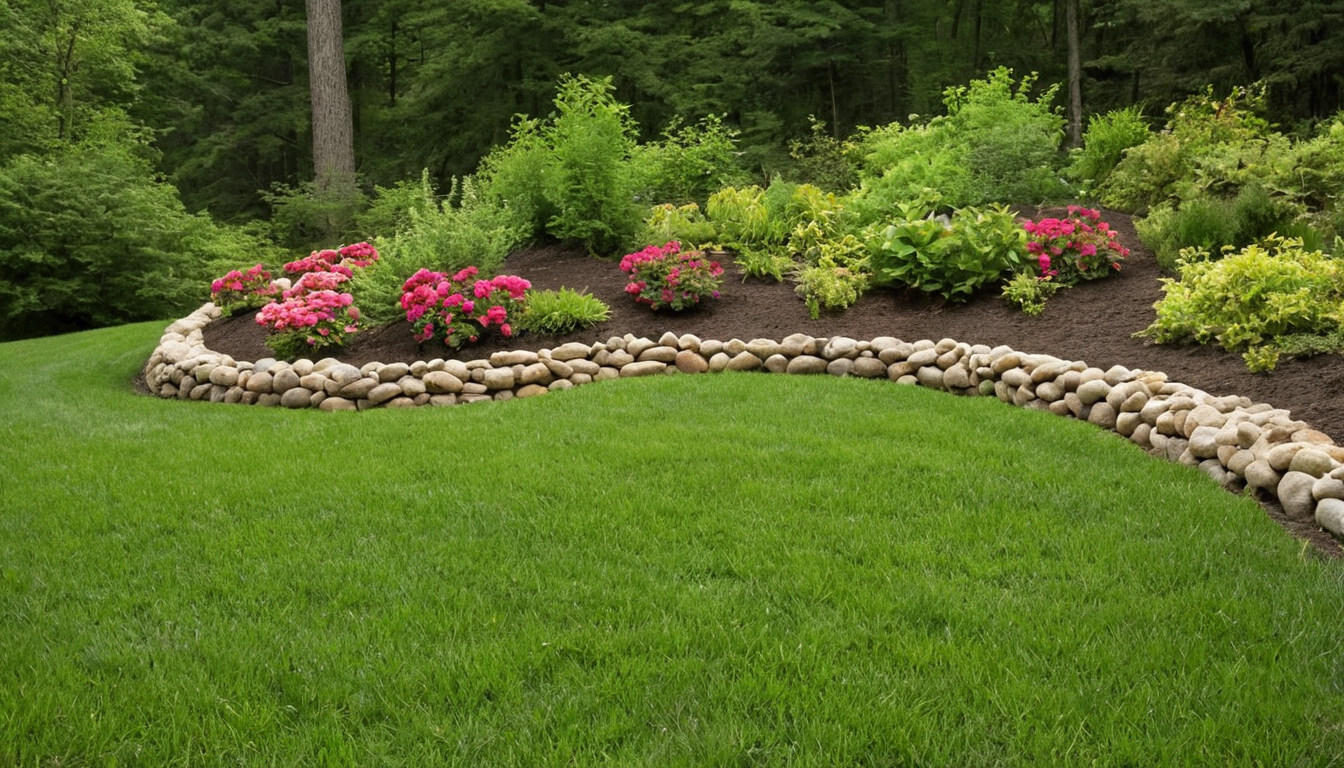
Should landscape fabric go under a residential rock bed shown with outdoor scale and terrain cues.
Landscape fabric under rock is a separator, not permanent weed control
Landscape fabric can keep decorative aggregate from mixing into prepared soil and reduce some growth from below, but it cannot stop seeds and debris from collecting above the rock.
- Decorative rock: Forms the finished surface, while its open spaces collect dust, leaves, seeds, and sediment.
- Landscape fabric: Separates rock from soil, but seams, edges, planting cuts, and tears create potential growth pathways.
- Prepared soil: Supports plants and receives water. Compaction, poor grading, and low points can restrict drainage regardless of the fabric.
Why do weeds grow above landscape fabric?
Weeds above fabric usually germinate in material among the rocks. Windblown dust, runoff sediment, leaf litter, and decomposing plant debris can form a thin rooting layer without any connection to the original soil.
The University of Illinois Extension also explains that organic mulch above fabric can decompose without becoming incorporated into the native soil. Decorative rock does not decompose like organic mulch, but plant debris caught between landscaping stones can still accumulate above the separator. Other weeds reach soil through planting cuts, exposed overlaps, damaged areas, or unsealed edges.
Can landscape fabric slow drainage under river rock?
Landscape fabric can affect water and air movement, but the word “permeable” does not predict field performance. Woven plastic-strip and spun polyester fabrics have different structures, while product grade and thickness also affect porosity.
To diagnose drainage, examine soil texture, compaction, slope, low points, sediment loading, and the discharge path. Deposited fines can obstruct fabric openings. Concentrated runoff, erosion, underdrains, and foundation drainage require site-specific professional review.
How does landscape fabric affect plants, roots, and irrigation in rock beds?
Fabric in a planted rock bed must accommodate root growth, expanding crowns, plant replacement, and irrigation service. Tight openings and concealed fittings can turn a useful separator into a recurring maintenance obstacle.
- Mature trees: Avoid pulling fabric across established surface roots. Seek arborist guidance if removal could disturb major roots.
- Young trees: Keep the trunk base and root flare uncovered, then enlarge the opening as the tree grows.
- Shrubs: Leave clearance around multiple stems and new basal growth.
- Perennials and ornamental grasses: Allow for expanding crowns, division, replacement, and soil amendment.
- Bulbs: Omit fabric where bulbs will be lifted, divided, or rearranged.
- Unplanted zones: Fabric causes fewer planting conflicts, but irrigation lines still need planned access.
Landscape fabric should not constrict tree trunks or shrub bases
The University of Maryland Extension’s root-flare guidance identifies the flare as the area where upper roots extend outward from the trunk and recommends keeping it visible. Covering the flare can contribute to lower-bark decay, reduced oxygen around roots, pest or disease problems, and concealed stem-girdling roots. Keep both fabric and rock clear of the flare, monitor the base, and enlarge the opening before contact occurs.
Drip irrigation beneath rock must remain inspectable and repairable
Record the locations of valves, filters, flush points, emitters, fittings, and repair couplings before laying fabric. Provide removable stone or identifiable access points where service will be required.
The irrigation manufacturer’s instructions should determine whether tubing and emitters sit above or below the selected fabric. Avoid placing leak-prone fittings beneath seams or where inspection requires dismantling the bed.
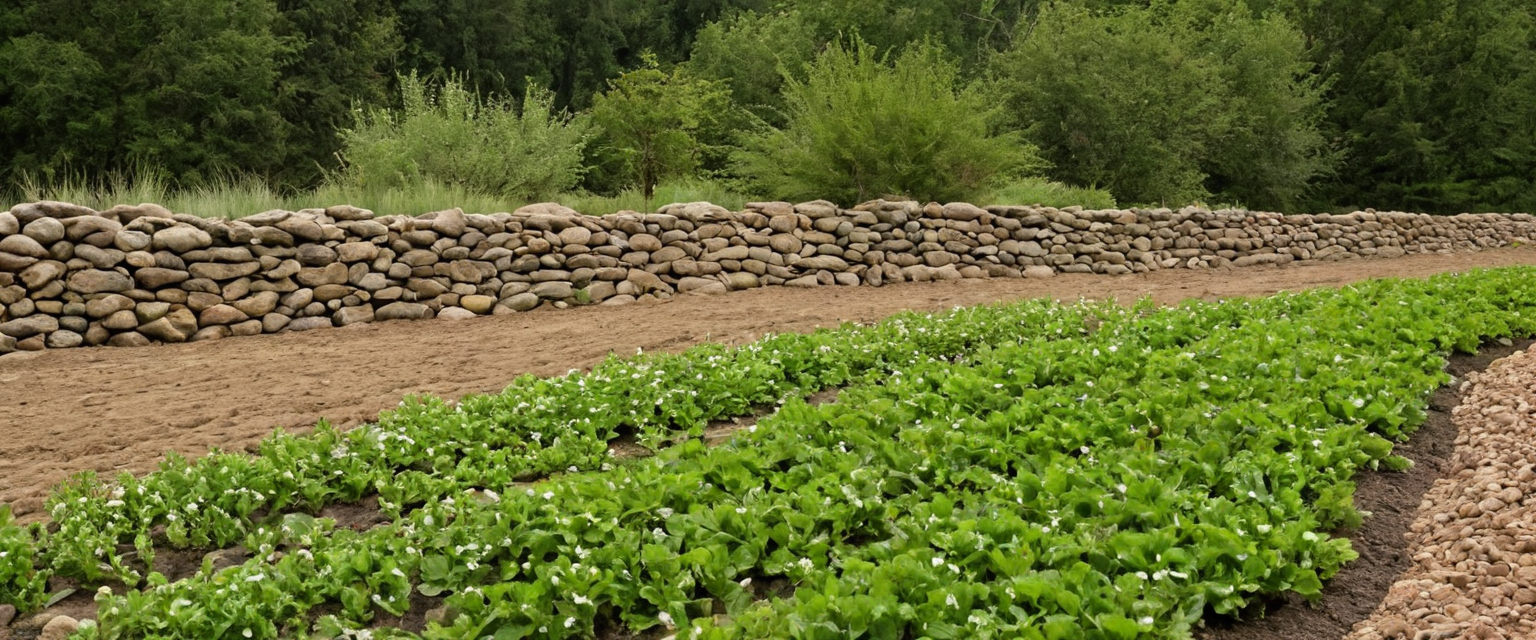
How does landscape fabric affect plants, roots, and irrigation in rock beds shown as a landscape planning reference.
Which landscape fabric specifications matter beneath landscaping rocks?
A useful specification records how a fabric is intended to perform, how that performance was measured, and what installation limits apply. A retail “weed barrier” label is not enough.
Woven and nonwoven landscape fabrics serve different assembly needs
Woven fabric may provide effective separation in some assemblies, while nonwoven fabric may suit some filtration conditions. Neither structure is an automatic winner. Compare products under the same soil, rock, slope, drainage, and traffic conditions.
- Identity and use: Manufacturer, product name, intended applications, exclusions, and fabric structure.
- Physical properties: Mass per unit area, thickness, and apparent opening size.
- Hydraulic properties: Reported water-flow, permeability, or permittivity property and its test method.
- Mechanical properties: Puncture, tensile, and elongation results with the reported test methods.
- Installation limits: Ultraviolet exposure, overlaps, fastening, required cover, slope restrictions, traffic limits, and repair instructions.
ASTM test results describe properties but do not select the product
Hydraulic, apparent-opening-size, puncture, and tensile tests measure different material properties. A test designation does not create a universal residential threshold or prove that a fabric matches a particular soil and landscaping rock. Selection requires a current technical data sheet and installation instructions for the exact product.
How should landscape fabric be installed under a decorative rock bed?
A durable installation starts with drainage, vegetation, grade, and irrigation preparation. Fabric cannot correct ponding, unstable soil, active erosion, or an inaccessible drip system.
-
Prepare soil, drainage, and irrigation before laying landscape fabric
Check drainage directions, downspouts, low points, erosion, and adjacent foundations. Stop for professional review where the site has standing water, an unstable slope, foundation-drainage concerns, or concentrated roof discharge.
Locate utilities according to local requirements. Mark irrigation components and planting holes, remove unwanted vegetation, correct the grade, and test irrigation before covering the bed. Keep tree root flares visible and provide room for expanding shrubs, grasses, bulbs, and perennials.
-
Landscape fabric seams and penetrations must follow product instructions
Follow the selected manufacturer’s requirements for overlap, fastening, exposure time, aggregate cover, exclusions, and repairs. Do not substitute generic pin spacing or overlap dimensions.
Detail plant and pipe openings for growth, inspection, and repair. Secure fabric at curbs, edging, walls, lawns, and adjoining hardscape without blocking drainage.
-
Decorative rock must be placed without damaging the fabric
Confirm rock size, gradation, fines content, shape, and delivery method before placement. Buyers should verify rock gradation, product documents, delivery, and return terms before scheduling a load.
Avoid dragging sharp stone, dumping from excessive height, or driving equipment over an ornamental-bed assembly. After placement, inspect coverage, seams, edges, penetrations, drainage paths, and irrigation access.
Accessibility note: An actual wheelchair-positioning space must meet applicable accessibility requirements. The 2010 ADA Standards specify a 30 by 48 inch clear floor or ground space. That dimension is not an ornamental-bed installation rule.
When should landscape fabric under rock be repaired, removed, or replaced?
Repair or remove fabric when it no longer separates rock from soil, conflicts with established plants, obstructs irrigation service, or contributes to drainage and detailing failures.
Diagnose the rock-bed failure before removing landscape fabric
Check surface debris, edging, soil contamination, drainage, seams, planting openings, and irrigation leaks. Weeds rooted in sediment above intact fabric indicate a surface-maintenance problem. Growth through tears or penetrations indicates failed detailing. Pulling established weeds can also lift fabric, according to the University of Illinois Extension.
| Symptom | Action |
|---|---|
| Surface weeds or exposed seams | Clean the rock and repair the affected area. |
| Mixed soil and stone or extensively torn fabric | Remove or replace the failed separation zone. |
| Ponding or inaccessible irrigation | Expose and correct the underlying condition first. |
| Buried root flares or roots crossing the layer | Remove fabric cautiously around the affected root zone. |
Lift a small test area by hand after locating irrigation and utilities. Retain intact fabric where separation remains useful. No fixed replacement interval applies to every product, site, and maintenance history.
Remove landscape fabric in phases around established plants
Move clean rock into a reusable pile and keep contaminated material separate. Cut fabric into manageable sections instead of pulling it across roots or buried tubing. Use hand tools near woody roots and concealed irrigation, and consult a qualified arborist if removal could disturb major roots.
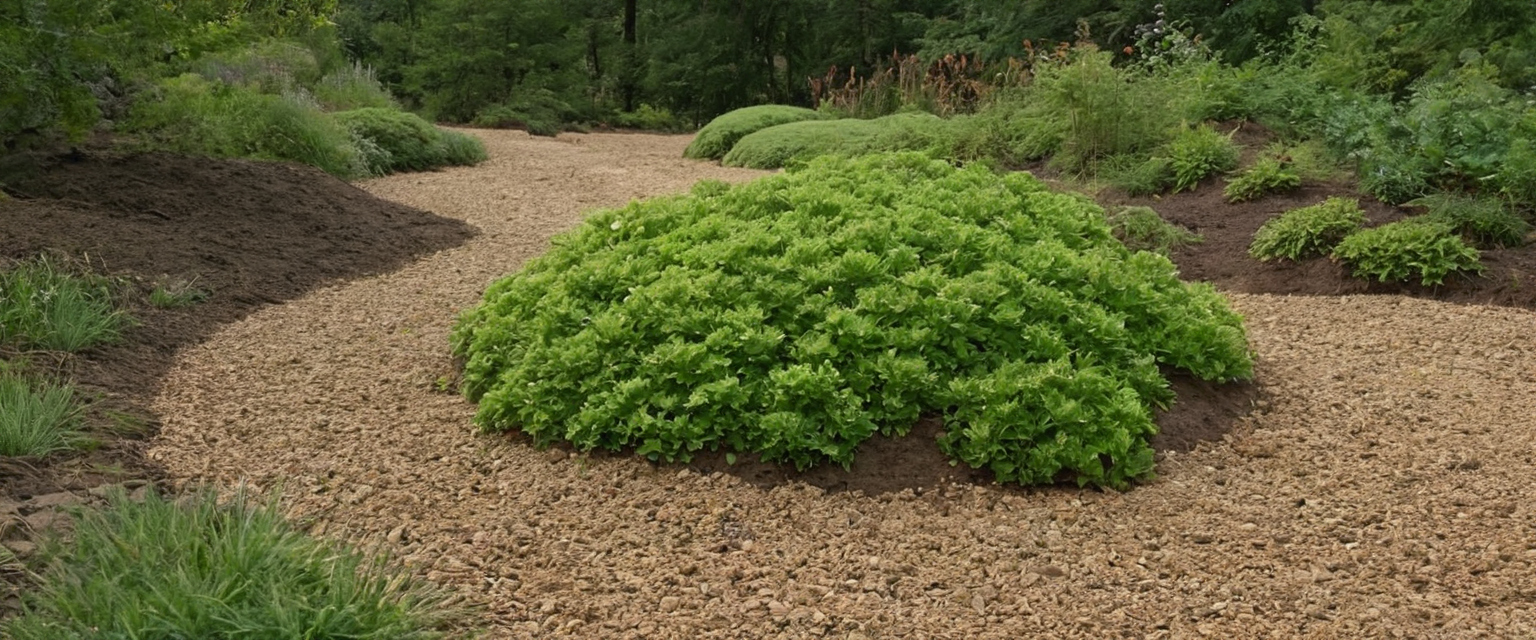
When should landscape fabric under rock be repaired, removed, or replaced shown as a landscape planning reference.
Where renovation adjoins an accessible dining or work surface, preserve the applicable accessible route and surface requirements. The 2010 ADA Standards place covered dining and work surfaces within a 28 to 34 inch height range, but that requirement does not determine whether fabric should remain in an ornamental bed.
What are the better alternatives to landscape fabric under rock?
The best alternative depends on planting density, future soil access, aggregate separation, runoff, irrigation service, and expected traffic.
| Alternative | Best fit | Main consideration |
|---|---|---|
| Unlined rock | Sparsely planted ornamental beds | Simplifies replanting, but soil and sediment can mix with the rock. |
| Organic mulch | Shrubs, perennials, and changing gardens | Maintains soil access but requires periodic renewal. |
| Dense planting | Sites suited to groundcovers | Reduces exposed soil after plants become established. |
| Designed aggregate assembly | Paths and patios | Requires a suitable base, edging, drainage, and surface. Review pea-gravel path and patio base requirements. |
Cardboard and plastic sheeting are not universal replacements. Driveways, drainage trenches, and dry creek beds also require purpose-designed assemblies.
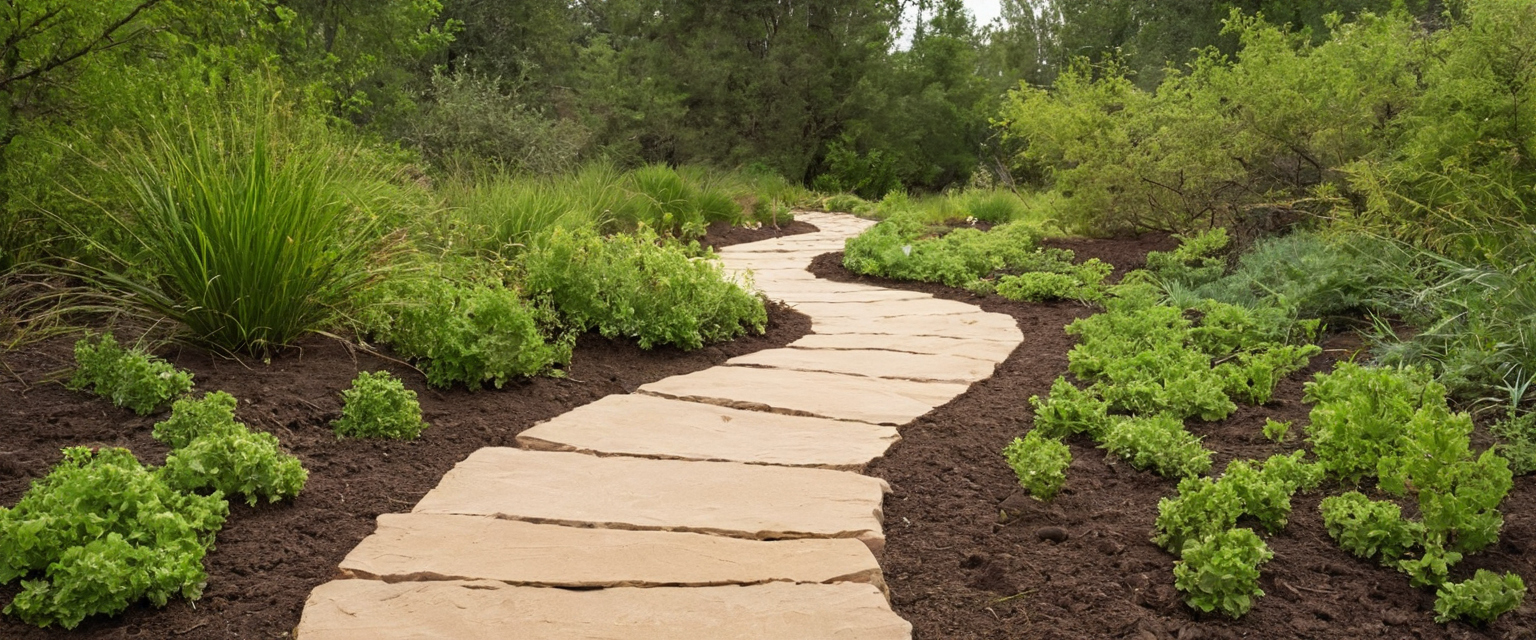
What are the better alternatives to landscape fabric under rock shown with outdoor scale and terrain cues.
Frequently asked questions
These answers summarize the main installation and maintenance decisions for residential ornamental rock beds.
Why is landscape fabric no longer recommended in some planted beds?
Fabric can conflict with expanding plants, soil amendment, root-flare visibility, irrigation repair, and frequent replanting. Sediment and organic debris can also collect above the layer, allowing new weeds to establish.
Should you use landscape fabric under rock?
Consider it where the primary need is separating clean decorative rock from stable soil in a sparsely planted bed. Skip or redesign it where sediment, changing plant layouts, root growth, runoff, or inaccessible irrigation will create recurring problems.
How long does landscape fabric last under gravel or decorative rock?
There is no reliable universal service life. Longevity depends on the product, installation, ultraviolet exposure before covering, stone placement, sediment loading, root interaction, and maintenance history. Inspect performance instead of replacing fabric on a fixed calendar.
Is there a better alternative to landscape fabric?
An unlined rock bed, organic mulch, dense planting, or a purpose-designed aggregate assembly may be better, depending on the site. Document the soil, drainage, planting, irrigation, and maintenance needs first, then choose the assembly rather than treating fabric as the default.